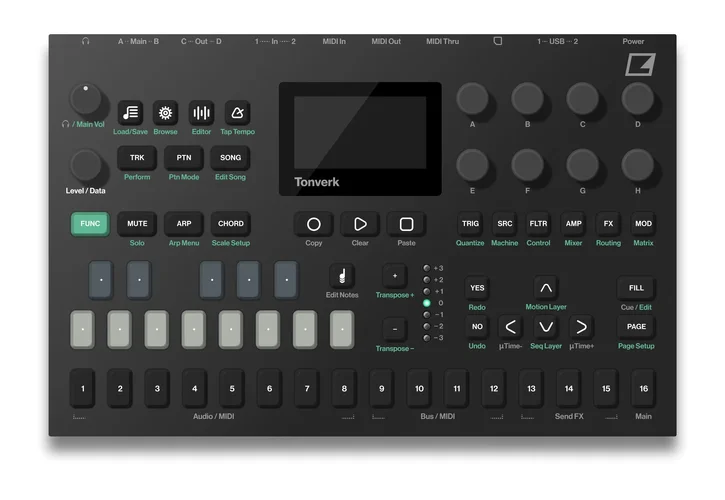
Elektron Tonverk ist ein polyphoner Sampler, der sehr lange Tracks und Patterns ermöglicht und dazu für echtes Songwriting gemacht ist. Der Emulator II als Groovebox - speichert auf SD Karte, was bei Elektron bisher so nie war. Das ist also neu. Sein Speicher hat ein paar GB frei. Aber die Karte darf mehr enthalten. Es gibt Kits, Projekte und Presets, wie man das kennt.
Gegenüber dem Digitakt 2 ist er kein Drumcomputer mit Sampling sondern ein polyphoner Sampler der auch Drums kann. Eine Workstation quasi. Früher haben wir massig mit sowas gearbeitet - Typ Ensoniq ASR10 bis Emax II oder ähnliches. Es gibt die typische Synthese und mehr Effekte als im Digitakt / Digitone 2 - wegen der Busse auch steuerbar. Routbar. Resamplebar, es gibt auch ein Tool um ext. Synth zu samplen und durchzuspielen - man wartet und das eingebaute "Sample Robot" sampled dein analoges Zeug und dann geht es los - Arbeiten wie Front 242 oder Depeche Mode Live 1984 und danach.
1) hat mehr als 8 Takte, weil Anzeige LEDs fehlen - es sind tatsächlich 256 Steps - 16 Takte
2) kann sicher 8 Spuren verwalten, ggf. weitere 8 MIDI Spuren - darunter liegen nocheinmal Subspuren / Subtracks von 8 Sounds, die man als Drumset pro Track nutzen kann. Vielleicht kann man auch später 12 erstellen, aber aktuell sind es wirklich "nur" 8, ähnlich MC707, da sind es 16.
3) Spuren sind polyphon melodisch 8 Stimmen pro Spur und 16 pro Step (MIDI), es ist ein Sampler und kein Synthesizer.
4) Vermute gut 1.4k€ -
5) 2 ins, 2 main 2 Einzelausgänge - MIDI aber nur normal,
2x USB - für Strom und Audio nutzbar - also vermutlich ein Hauptsequencer. kein Mixer, also eher was, was auch extern verarbeiten KANN und ggf. samplen und verarbeiten, er hat Spuren für FX Sends und Master.
Die Maschine ist also neu für Elektron - konsequent polyphoner Sampler aber noch ohne Granular und ohne Slices. bis OS 1.0X
6) Seit OS 1.1.0 gibt es eine Granular Engine, die neu ist! 11/2025.
Mehr aktuell dazu: hier (weiter diskutieren und mehr erfahren), Videos, Inhalte gibt es da.
Achtung, die Specs lesen sich verwirrend - man muss leider einiges wissen über Elektron, damit man das richtig interpretieren kann.
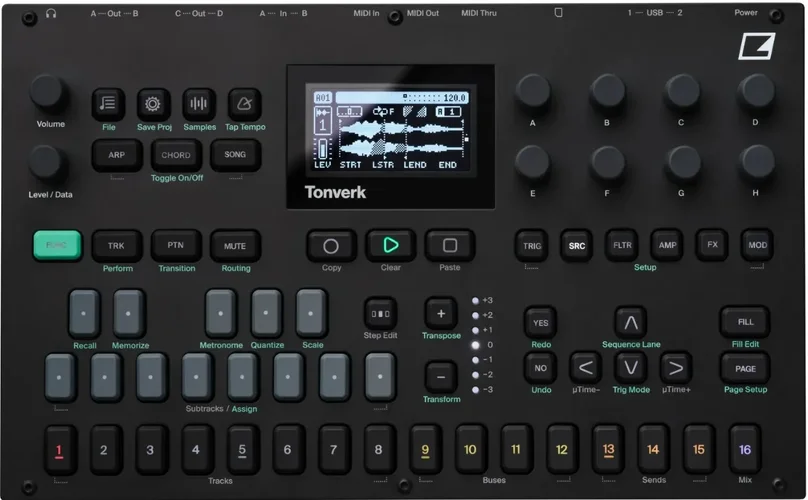
Die Prototypen sahen so aus, die geleakt wurden, da haben sich nur Bezeichnungen geändert. Heute, 2025, am 10 September kam Tonverk offiziell auf den Markt und ist auch direkt kaufbar.
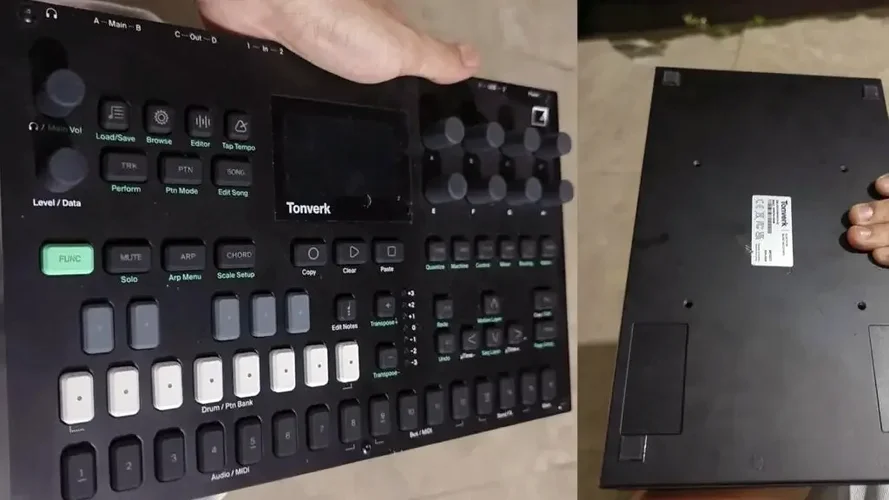
Es könnte vieles sein, zB Monomachine und Co ..
Siehe letzte SequencerTalk Sendung dazu.
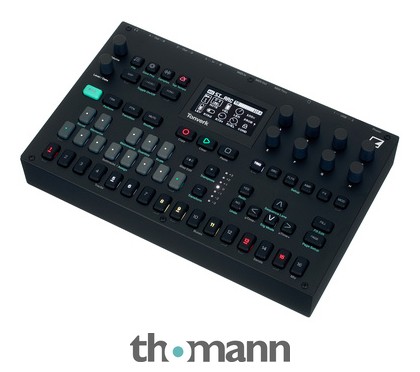
 www.thomann.de
Kostet dies.
www.thomann.de
Kostet dies.
Gegenüber dem Digitakt 2 ist er kein Drumcomputer mit Sampling sondern ein polyphoner Sampler der auch Drums kann. Eine Workstation quasi. Früher haben wir massig mit sowas gearbeitet - Typ Ensoniq ASR10 bis Emax II oder ähnliches. Es gibt die typische Synthese und mehr Effekte als im Digitakt / Digitone 2 - wegen der Busse auch steuerbar. Routbar. Resamplebar, es gibt auch ein Tool um ext. Synth zu samplen und durchzuspielen - man wartet und das eingebaute "Sample Robot" sampled dein analoges Zeug und dann geht es los - Arbeiten wie Front 242 oder Depeche Mode Live 1984 und danach.
1) hat mehr als 8 Takte, weil Anzeige LEDs fehlen - es sind tatsächlich 256 Steps - 16 Takte
2) kann sicher 8 Spuren verwalten, ggf. weitere 8 MIDI Spuren - darunter liegen nocheinmal Subspuren / Subtracks von 8 Sounds, die man als Drumset pro Track nutzen kann. Vielleicht kann man auch später 12 erstellen, aber aktuell sind es wirklich "nur" 8, ähnlich MC707, da sind es 16.
3) Spuren sind polyphon melodisch 8 Stimmen pro Spur und 16 pro Step (MIDI), es ist ein Sampler und kein Synthesizer.
4) Vermute gut 1.4k€ -
5) 2 ins, 2 main 2 Einzelausgänge - MIDI aber nur normal,
2x USB - für Strom und Audio nutzbar - also vermutlich ein Hauptsequencer. kein Mixer, also eher was, was auch extern verarbeiten KANN und ggf. samplen und verarbeiten, er hat Spuren für FX Sends und Master.
Die Maschine ist also neu für Elektron - konsequent polyphoner Sampler aber noch ohne Granular und ohne Slices. bis OS 1.0X
6) Seit OS 1.1.0 gibt es eine Granular Engine, die neu ist! 11/2025.
Mehr aktuell dazu: hier (weiter diskutieren und mehr erfahren), Videos, Inhalte gibt es da.
Achtung, die Specs lesen sich verwirrend - man muss leider einiges wissen über Elektron, damit man das richtig interpretieren kann.
Die Prototypen sahen so aus, die geleakt wurden, da haben sich nur Bezeichnungen geändert. Heute, 2025, am 10 September kam Tonverk offiziell auf den Markt und ist auch direkt kaufbar.
Es könnte vieles sein, zB Monomachine und Co ..
Siehe letzte SequencerTalk Sendung dazu.
- 8 Stereo-Audiospuren, 12 Subspuren pro Spur, 8 Stimmen pro Spur
- 8 Spuren als Audio oder MIDI-Track, wie Digitone II etc.
- 4 Bus-Tracks für Routing und FX
- 3 Send Effect Tracks und 1 Mix Track
- 4 Machines Single Player (Poly Sampling), Multi Player (Multisampling) Subtracks (Drum Multisample Set) oder MIDI (auch Bus-Spuren)
- Single Player: polyphon, WAV-Dateien (Mono / Stereo)
- Multi Player: Laden, polyphon spielen mit Multisamples (mehrer Velocity-Layer / Note)
- Subtracks:pro Spur 8 monophone, multitimbrale Subtracks - jeder Subtrack mit eigenem Sample, Sequenzer und individuellen Parametersteuerungen, könnte man rein technisch mit den Oktavtasten auch auf 12 erweitern, später.
- 1 x Base-width-Filter pro Spur / Subtrack
- 2 LFOs, 2 FX LFOs / Modulationshüllkurve pro Audiospur
- 2 LFOs / Bus-, Send Effect- und Mix-Track
- 16 zuweisbare CC-Regler und 2 zuweisbare LFOs pro Spur wie Digitakt 2
- 2 Trig Modes, Keyboard-, Chord, Song-Modus
- polyphoner Sequenzer: 256 Steps pro Pattern / Spur, individuelle Patternlänge pro Spur, Clock-Teiler pro Spur, Parameter locks, Trig conditions / Retrig, Micro Timing und Arpeggiator pro Spur
- verschiedene Effekte (abhängig von Spurart)
- 128 x 64 Pixel OLED Display
- 5 GB interner Sampling-Speicher
- inkl. 64 GB SD-Karte, Netzteil, USB-C-Kabel
- Maße (B x T x H): 286 x 176 x 63 mm
- Gewicht: 1,85 kg
- MIDI In/Out/Thru
- 2 x 6,3 mm Klinkeneingang
- 4 x 6,3 mm Klinkenausgang
- 6,3 mm Kopfhörerausgang
- 2 x USB C Port
- SD Card Slot
🎹 Elektron Tonverk
Elektron Tonverk; Polyphoner Performance Sampler; 8 Stereo Audiospuren; alle 8 Spuren entweder als Audio oder als MIDI-Track verwendbar; 4 Bus-Tracks, 3 Send Effect Tracks und 1 Mix Track; 4 Machines pro Audio Track wählbar: Single Player, Multi...
1.295,00€
www.thomann.de
Zuletzt bearbeitet: