Ich habe dazu bereits eine Frage im Mastering Vast-Forum gestellt, aber da hier ja auch noch Kurzweil-Nutzer sind, die dort vielleicht nicht aktiv mitlesen, frage ich hier auch noch mal:
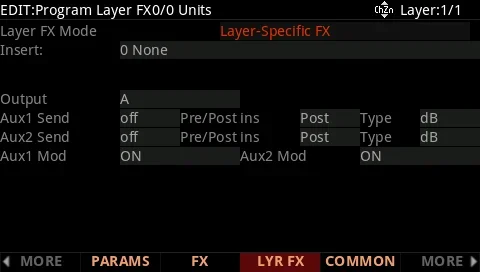
- In der "Layer-based FX"-Seite den Wert von "Aux1 Send" auf "100%" setzen und als "Aux1 Mod"-Quelle "LFO1" auswählen
Nun sollte eigentlich der LFO1 den Send-Level vom Aux-Effekt 1 modulieren. Tut er aber nicht. Der Effekt bleibt bei mir komplett inaktiv. Das Gleiche gilt auch für Envelopes und ASRs - kein Effekt.
Könnte es sein dass AUX send nicht auf 100% stehen darf, damit eine Modulation greift? Wenn ein LFO z.B. zwischen 0 und 100% schwingt, kann er nix mehr modulieren, weill das schon auf 100% ist.
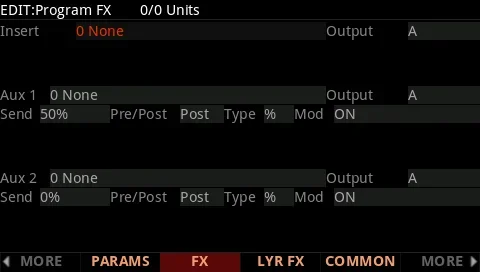
Bei den FX muss man auch darauf achten was intern im Mixer vom FX Programm eingestellt ist. FX die als AUX geplant sind, müssen (sollten) im FX Programm auf 100% mix stehen. Sind sie zu niedrig eingestellt, kommt nix oder nur ganz wenig wenn man AUX aufdreht.
Welche die als Line/inserts gedacht sind, brauchen entsprechend weniger Mix.
Denke von der FX Abteilung als eigenes, unabhängiges Gerät, welches virtuell "verkabelt" ist, und wie externe Hardware entweder in ein Mischpult als AUX eingschleift sind, oder als Insert hinterm Ausgang vom Synth.
Etwas verwirrt bin ich von Deiner Beschreibung "use Layer FX". Ich glaube das sind inserts. Aber... ich habe schon länger nichts mehr programmiert und habe das vergessen... Ich glaube diese Funktion habe ich auch noch nie verwendet.
Wenn man viel Setups baut, ist es besser ein immer gleiche globale Struktur einzuhalten, sonst passieren merkwürdige Dinge mit den FX routings.
Ich bin mir ehrlich gesagt auch nicht so sicher, ob da nicht immer noch Bugs in dem System drin sind.




 Eher wundere ich mich über Kurzweil, aber wäre es nicht sinnvoller für solche Klänge VA-Oszillatoren zu verwenden? Bei der MPC5000 verhalten sich VA-"Oszillatoren" wiederum wie Samples. Sie werden wie Samples gepitched mit entsprechenden Artefakten und nicht wie richtige Oszillatoren. Das nur nebenbei angemerkt.


 2026-03-21 Dortmund - No Limits No Control - Mit Nullvektor (D), Frett (PL), Incendie (F), Persons Unknown (D),Moogulator (D)